

According to the AWS Machine Learning Blog, Amazon Quick is now integrated with Microsoft 365 applications, bringing connected data access, enterprise knowledge retrieval, and agentic document editing into Word, Excel, PowerPoint, and Outlook.
Behind the announcement, AWS is making a strategically important move: it is placing a third-party AI agent directly inside the productivity environment where many knowledge workers already spend their day. This is not simply another chatbot competing for attention in a browser tab. Amazon Quick is positioned as an embedded assistant that can work with business context and take actions within familiar Microsoft 365 workflows.

That distinction matters. The future of enterprise AI will not be determined only by which model produces the best answer. It will also depend on which agents can access trusted information, understand application context, and help users complete work without forcing them to switch tools.
What AWS actually announced
Amazon Quick for Microsoft 365 brings Amazon’s agentic AI capabilities into Microsoft Word, Excel, PowerPoint, and Outlook. The stated capabilities include retrieving information from connected enterprise data, answering questions using organizational knowledge, and assisting with document, spreadsheet, presentation, and email-related tasks.
The agentic element is especially significant. Rather than limiting the product to text generation, AWS is presenting Quick as a system that can reason across information and support multi-step work inside Microsoft applications. In practical terms, that could mean helping draft or revise a document, analyzing information in a workbook, preparing presentation content, or assisting with email workflows.
The key architectural question is not just what the model can generate. It is how Amazon Quick connects to enterprise sources, how it respects permissions, and what actions it is authorized to perform. Those details will determine whether the product is useful in production or remains an impressive demonstration.
A direct challenge to Microsoft Copilot
Amazon Quick enters an ecosystem where Microsoft already offers Copilot for Word, Excel, PowerPoint, Outlook, Teams, and other services. That makes this launch both an integration story and a competitive one.
Microsoft Copilot benefits from close proximity to Microsoft Graph, SharePoint, OneDrive, Teams, and the broader Microsoft 365 identity and security model. Amazon Quick, by contrast, gives organizations another AI layer operating within the same user-facing applications. That could appeal to companies already invested in AWS services, Amazon Bedrock, or AWS-based enterprise data platforms.
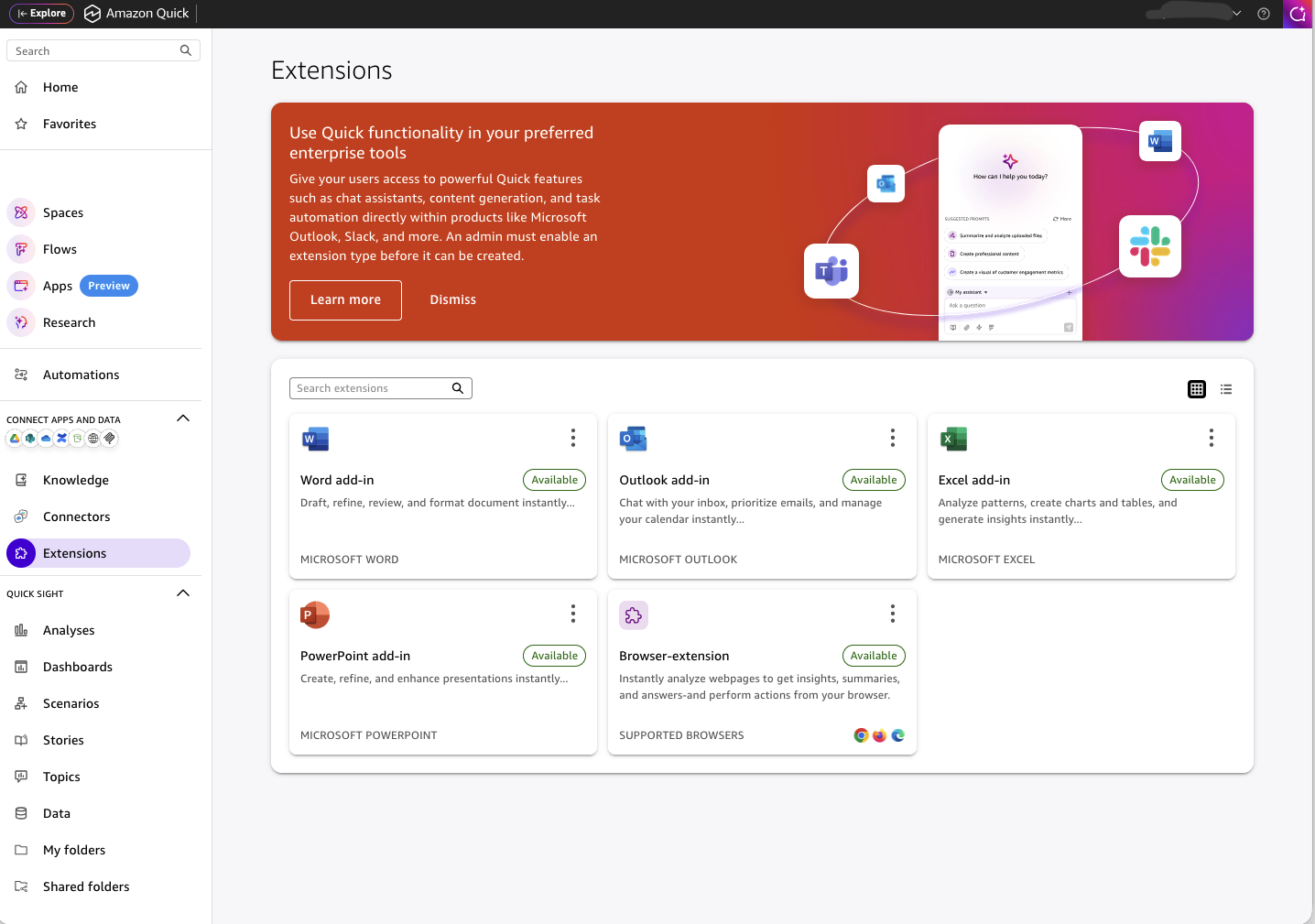
For IT leaders, this creates a coexistence decision rather than a simple replacement decision. A company may use Microsoft Copilot for deeply integrated Microsoft 365 scenarios while evaluating Amazon Quick for teams that rely heavily on AWS data, applications, or AI governance standards. But running both agents introduces real complexity: overlapping capabilities, inconsistent answers, duplicated licensing, and user confusion about which assistant should be trusted.
SharePoint and Teams are particularly important to this discussion. Even though the announcement centers on Word, Excel, PowerPoint, and Outlook, those applications frequently contain or reference content originating in SharePoint, OneDrive, Teams, and Microsoft Graph. Organizations will need to verify exactly which repositories Amazon Quick can access, whether access is evaluated using the user’s existing permissions, and how content is logged, retained, and governed. “Connected data” is not a sufficient security description by itself.
A Quick Analysis
AWS is competing at the workflow layer, not merely the model layer. Embedding an agent into Microsoft 365 may be more commercially meaningful than offering another standalone AI interface. The real differentiator will be trusted enterprise context and predictable permissions—not generic drafting quality, where Microsoft already has a strong position through Copilot.
Where the practical value could emerge
The strongest early use cases are likely to involve cross-application work. A user might retrieve enterprise knowledge while drafting a Word document, transform business information into an Excel analysis, or use organizational context when preparing an Outlook response.
This is also where agentic behavior can reduce friction. Instead of asking a user to copy information between a knowledge system and Microsoft 365, an embedded assistant can potentially perform more of the workflow in place. For technical teams, the value should be measured in completed tasks, reduced application switching, and fewer manual handoffs—not the number of generated paragraphs.
However, enterprises should treat the announcement as an evaluation opportunity, not an automatic procurement decision. They need to test factual grounding, citation quality, latency, auditability, data residency, administrator controls, and failure behavior. Agentic editing also deserves special scrutiny: users should know what changed, which sources were used, and whether an action can be reversed.
Practical Takeaway
Microsoft 365 and AWS customers should run a controlled comparison between Amazon Quick and Copilot using real workflows across Word, Excel, PowerPoint, and Outlook. Start with low-risk knowledge retrieval and drafting, map every connected data source and permission boundary, and define approval requirements before enabling autonomous actions.
The broader lesson is that enterprise AI adoption is becoming an ecosystem governance problem. The winning assistant will not necessarily be the one with the most ambitious demo. It will be the one that fits the organization’s identity model, data architecture, compliance obligations, and everyday work with the fewest surprises.
References
Amazon Quick for Microsoft 365: Agentic AI where you work: https://aws.amazon.com/blogs/machine-learning/amazon-quick-for-microsoft-365-agentic-ai-where-you-work/